


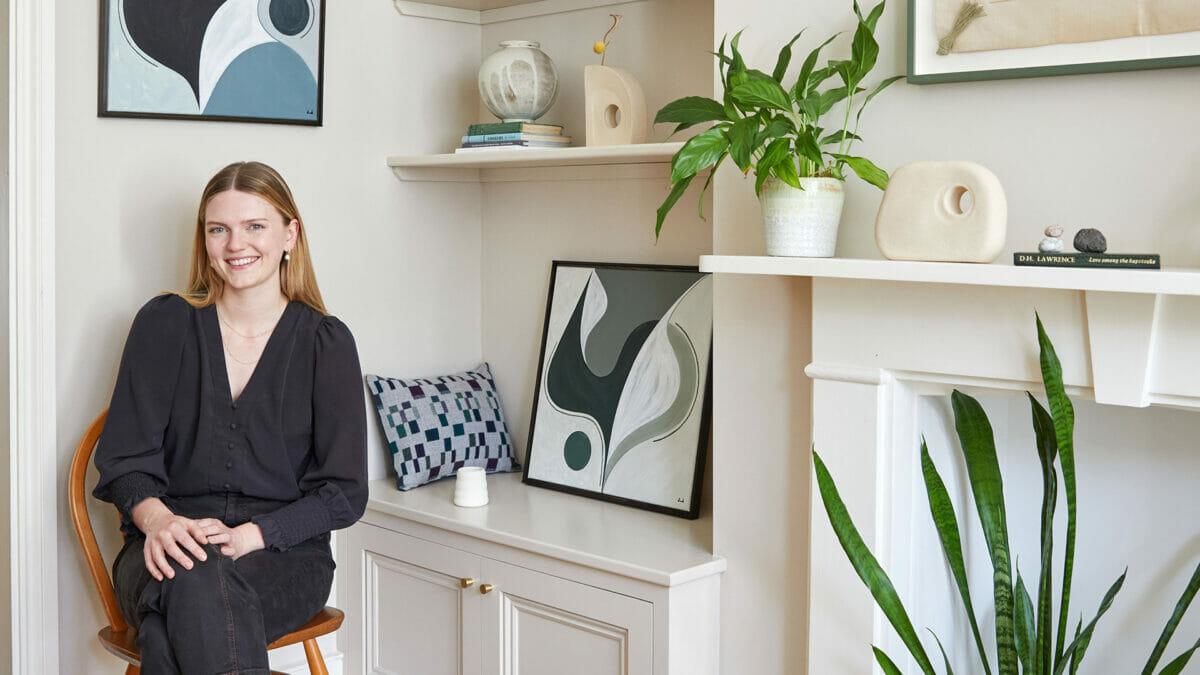
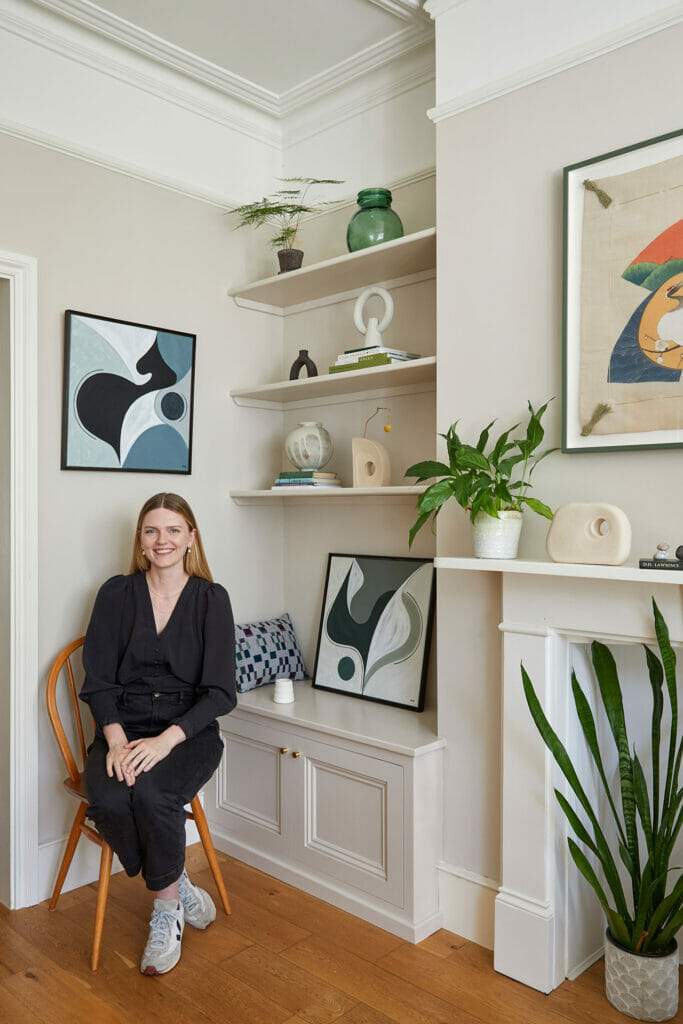
Artist Laura Wickstead sat quietly on the chair waiting for her picture to be taken… her paintings sweeping and flowing around her. The gestural movements and marks created calming, organic shapes in the room. The photo is to accompany the release of a new body of work by Laura, created this spring exclusively for A&O. We are delighted to share with you three of her new paintings. Join us to discover her story.
Welcome Laura to A&O. Our Q&A marks the release of a collection of new paintings. Can you tell us more about these works and what they mean to you?
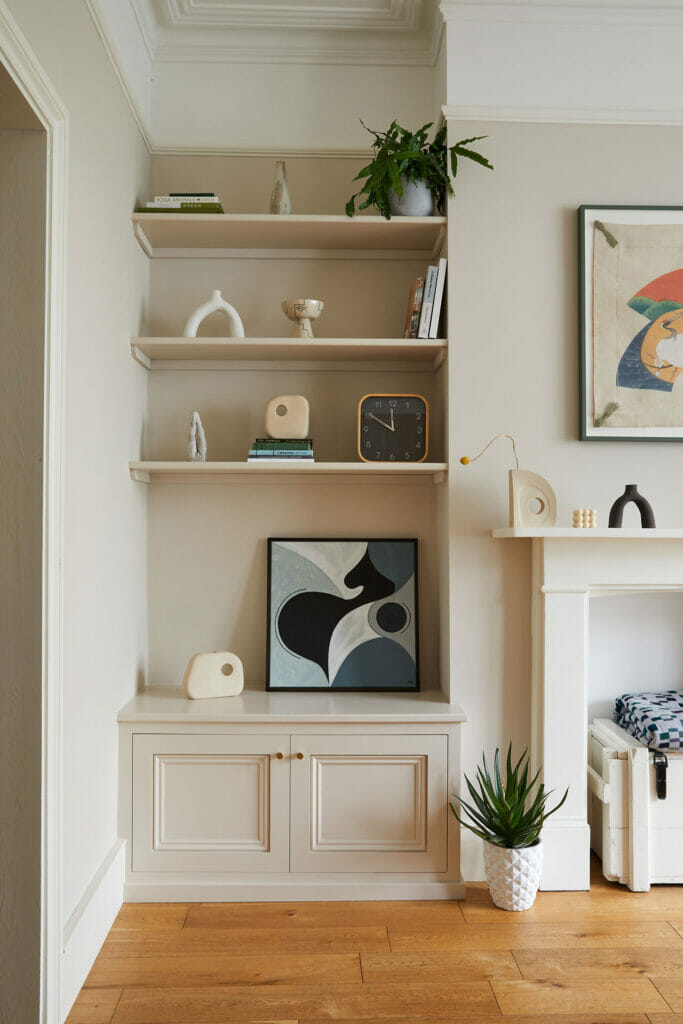
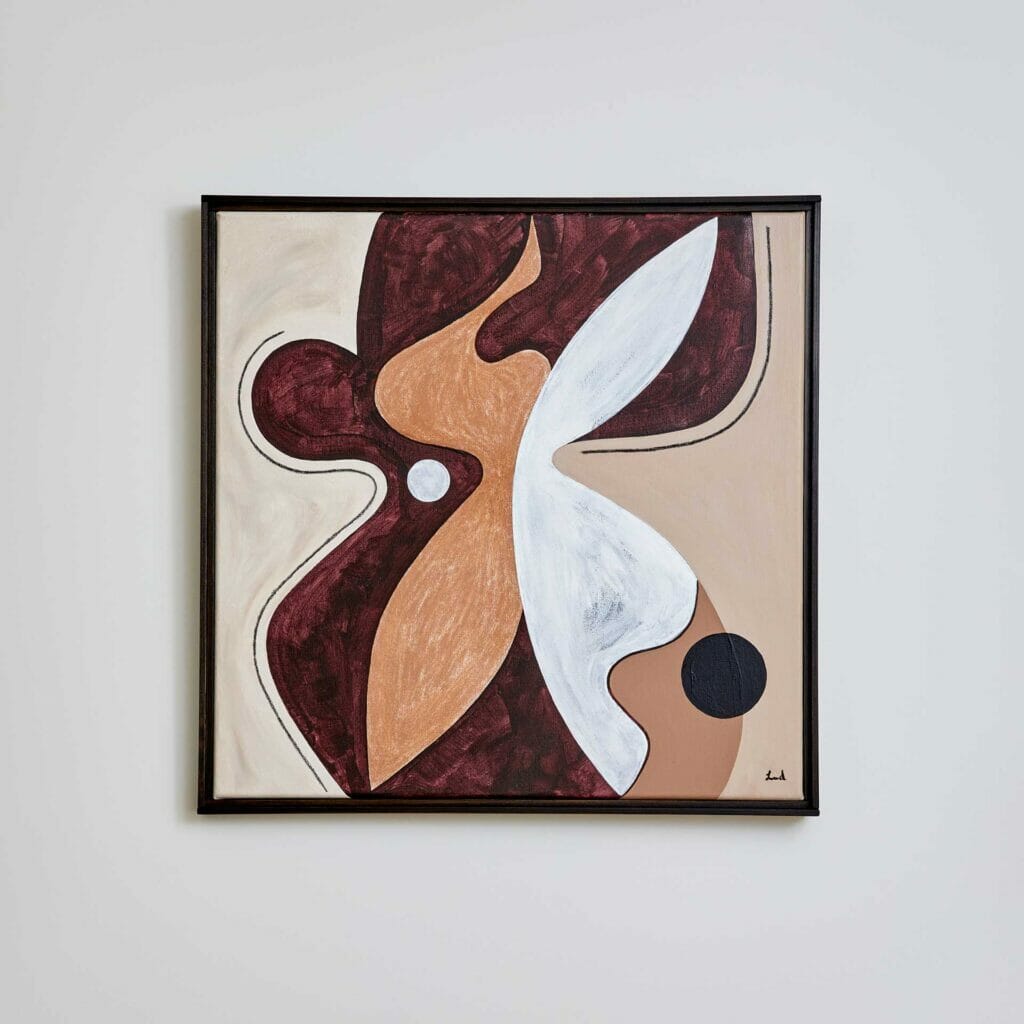
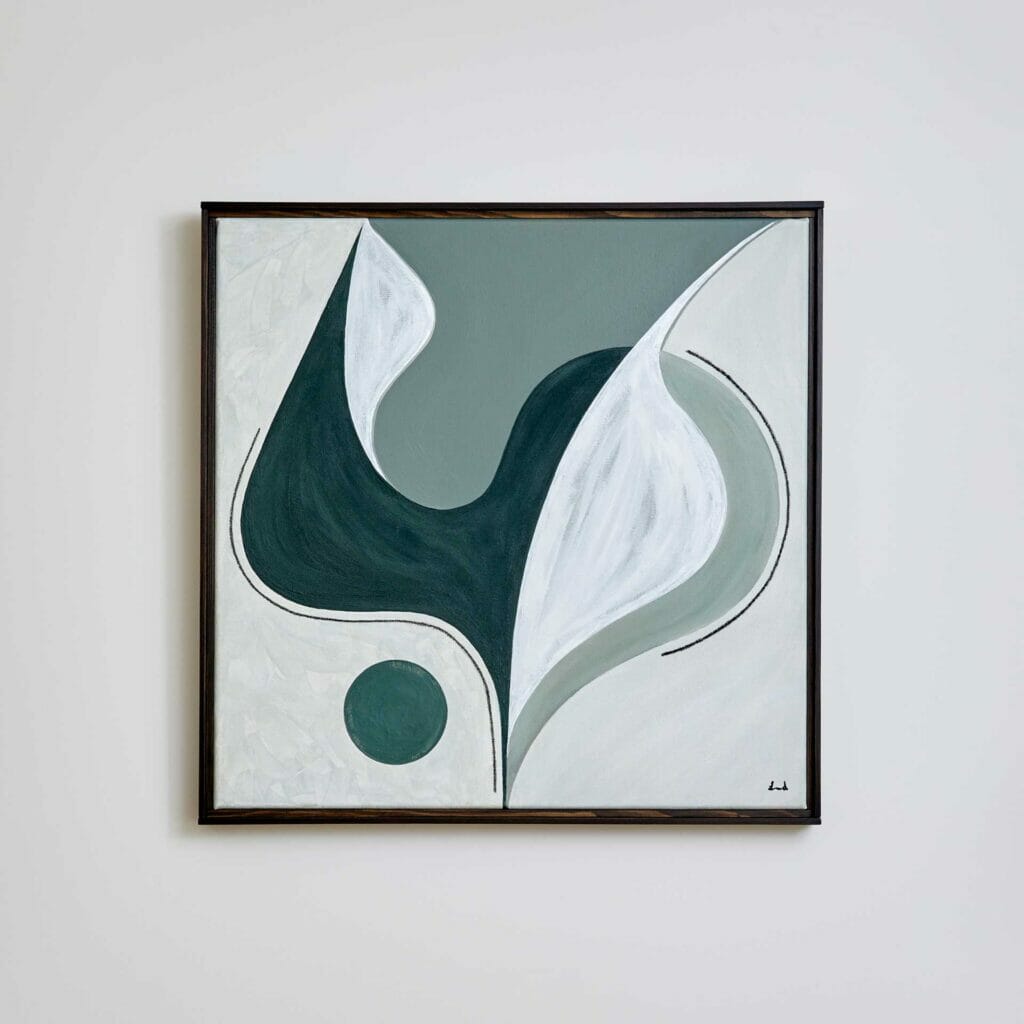
Thank you! So happy to be joining such a wonderful platform and introducing a new trio of paintings in collaboration with A&O. For this collection, I created three paintings which are an interplay of shape and form. In each piece, I started with a larger shape that I rebuilt using smaller organic formations. My intention was that your eyes would flow with the curves of each piece as you build and deconstruct the different formations to see what forms you can observe for yourself. Each painting is a balancing act and I like to think these artworks are a joyous combination of contrast and calm.
We’re interested to learn more about your journey. You painted and made art at school, at university you studied English Literature and two years ago decided to be an artist full time. Was it a liberating feeling to go into art full time? And does literature still play an important role in your life?
It was definitely a liberating experience becoming a full-time artist. I’d been slowly working towards that moment for the best part of a decade and I was finding it hard juggling my day job with my art career. Suddenly becoming the sole dictator of my own time and truly allowing myself to experiment and find my creative process was probably the best part of the jump. And yes, literature does still play an important role, in the sense that I read a lot and it’s the activity I now do solely for joy. I think that’s a really good thing as I never feel any resentment that I commodify my love of art – because I also have another love of books.

During the making process you use an iPad to create initial sketches of the paintings. How do you find the interplay between digital mark-making and painting on canvas?
Creating digital sketches of paintings first is such a wonderful way to create artworks because I feel completely free in the trial and error process. As I’m not scared of wasting paper or getting it right first time, I can redraw the same shape 50 times or come back time and time again until it’s just right. When I recreate the digital sketch on canvas, I then get to work out the techniques I’d like to use with different brushstrokes and textures and how I can bring that sketch to life. It’s almost as if the digital mark-making sets the foundation of a piece that allows the painting on the canvas to flourish.
How do you choose the colour palette for your paintings?
It’s quite an organic process for choosing the colour palette – often I’m out and I spot a gorgeous colour combination that I then want to recreate in one of my works. Other times, it’s simply that I think the particular forms in the piece would suit warm tones, so I go about experimenting with creams and oranges. As mentioned above with the digital sketches, I am always playing around with not only the shapes but also the palette. I will experiment with multiple palette options before settling on the right one for the piece, as soon as I hit the perfect balance of colours and contrasts, I’ll just know.
Your studio is at home in London. What’s a typical day like in the studio?
I like to start the day out of the house and in the hustle and bustle of life so I go to a local cafe and work on the admin side of things over a cup of coffee in the morning. I’ll then come back to my studio around midday and start painting. I normally create one artwork at a time and do it in layers. I work in acrylic and, although it dries quickly, if you don’t have the patience to let each layer settle and dry, you can quickly ruin a painting. It’s a bit of a puzzle to work out the order and I have to plan it in my head before I start, but when I’m in the flow of it, time just flies by and it’s evening before I know it.
We love your mural in the Hoxton hotel in Holborn in London. How did you find working on a larger scale and painting directly onto the wall?
Thanks, I’m really proud of that piece. It was definitely a challenge but a fun one at that. I created a small mock up on canvas and then used a grid system to make sure everything was scaled correctly. Painting directly onto the wall was tricky as the exposed concrete meant that the paint dried about two shades darker than normal and I had to make sure I mixed enough paint for each shape as it’s almost impossible to mix the exact same colour twice. But I just went for it and trusted my skills and experience. When I finished it, it was a real ‘pinch me’ moment and now, when I pass by, I have to remind myself that I did it!
What was the last exhibition you visited?
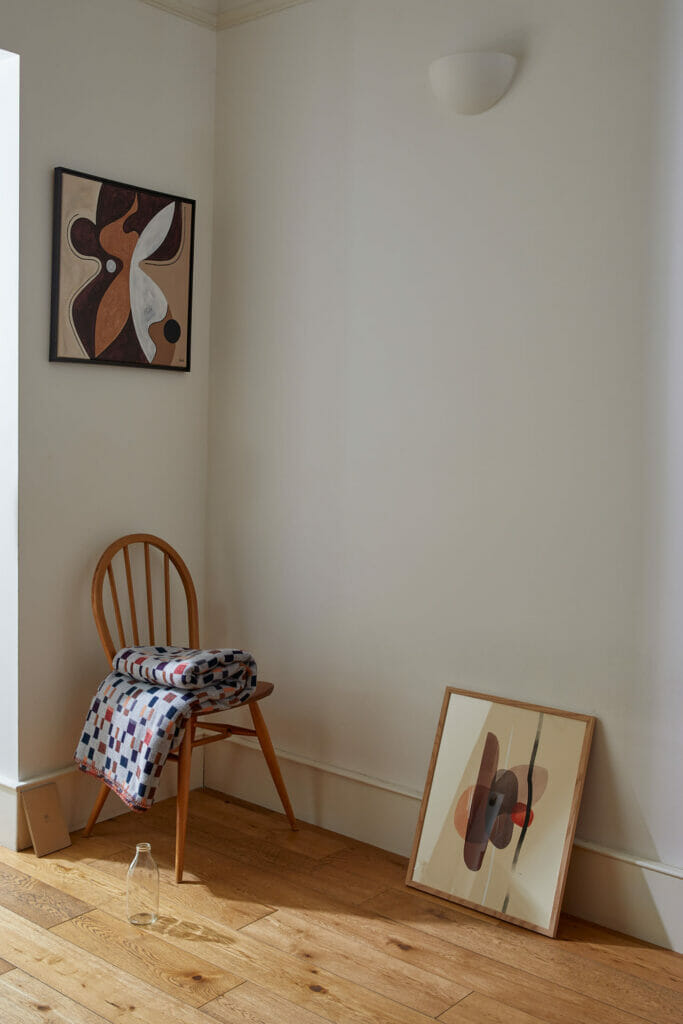
The last exhibition was with MAH Gallery in East London called ’The Pavilions’ which was amazing. It was an exhibition showcasing a lot of emerging artists that I’d interacted with online and whom I was finally able to meet in person. MAH Gallery’s ethos is to celebrate a ‘continued curiosity towards an emerging landscape that amalgamates artwork and interior design’. I love artwork that can be lived with and not only observed from a distance. I think this exhibition balanced that beautifully by pairing artworks, sculptures and crafted furniture together in really unusual ways.
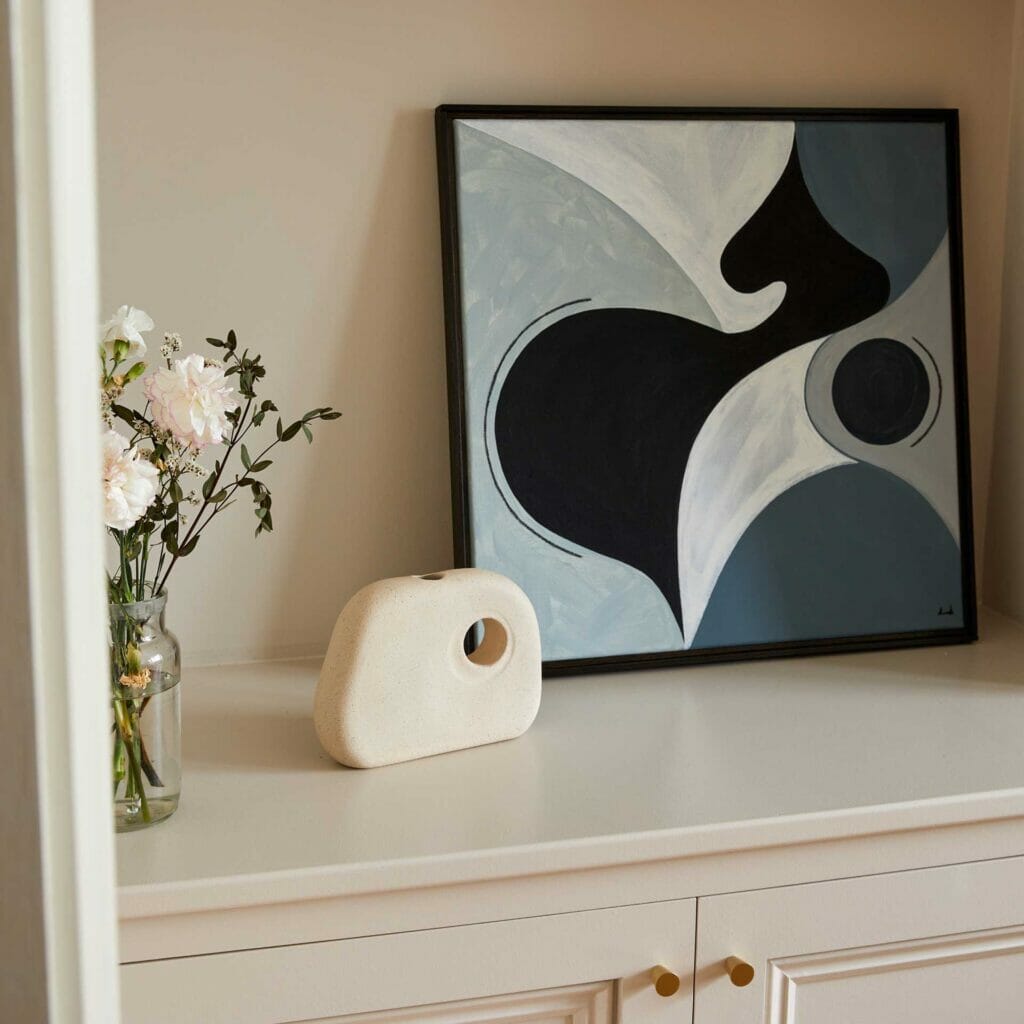
Photography by Veerle Evens.


